For decades, Svalbard has served as a backdrop for nature documentaries, TV productions, and major international films. In recent years, some of the world’s biggest productions have made their way here, including blockbuster films such as Superman and the latest Mission: Impossible. The combination of dramatic natural landscapes and relatively accessible Arctic infrastructure makes Svalbard a unique filming location. Here, filmmakers can capture powerful, authentic scenes without compromising on logistical needs. And it doesn’t stop there, as a visitor, you can experience many of the same landscapes you may already have seen on the big screen.

Nature’s Own Film Set
Steep mountains, wide valleys, massive glacier fronts and Arctic wildlife. Combined with the ever-changing Arctic light, from the midnight sun to the polar night, it’s easy to understand why Svalbard is highly sought after for film and TV productions. The landscape provides a raw and authentic setting for storytelling, whether it’s an intimate nature documentary or a large-scale feature film. At the same time, Longyearbyen functions as an efficient production hub. The town offers hotels, restaurants, an international airport, healthcare services, and the infrastructure needed to support large film crews, all in the middle of the Arctic.
Behind the Scenes: Logistics in the Arctic
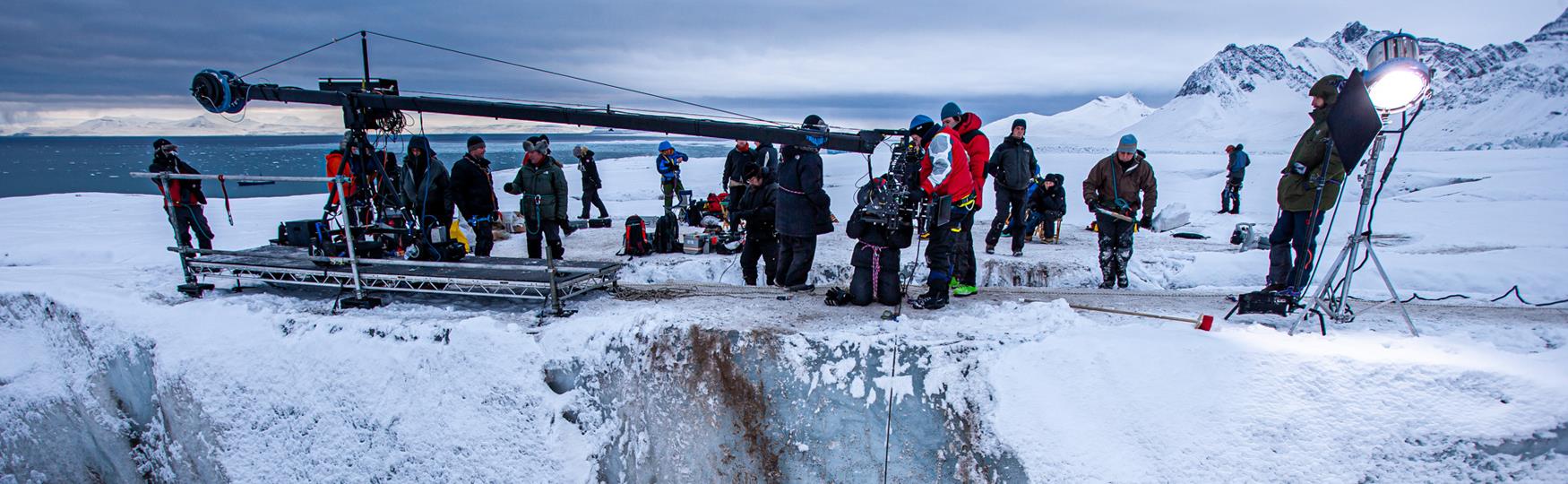
Producing a film on Svalbard is about much more than capturing beautiful images. It requires planning, experience, and above all, local knowledge. Australian-born Jason Roberts has been operating on Svalbard for over 30 years through his company PolarX, a leading provider of logistics and production services for film projects in polar regions. From BBC wildlife documentaries to major Hollywood productions, Roberts and his team have made the seemingly impossible possible in some of the world’s most challenging environments.
Watch a short movie from the film production of Mission Impossible here: https://youtu.be/zpvZyW9IG3Y
Over the years, PolarX has been involved in a wide range of productions that have helped put Svalbard on the international map, including Frozen Planet, Planet Earth, and more recently, Superman and Mission: Impossible. Their experience ranges from small and agile crews to large-scale productions involving hundreds of people. PolarX’s role extends far beyond logistics. They assist with location scouting, planning, safety, transportation and on-the-ground execution. Just as importantly, they often act as advisors in the early stages of production, where local knowledge is crucial. It’s essential to be involved early in the process, Roberts explains. That way, we can help find solutions that deliver strong visual results while still being realistic to execute in this environment.
On Svalbard, there are only around 40 kilometres of roads around Longyearbyen. This means that most work takes place outside traditional infrastructure. Transport to filming locations often involves boats, snowmobiles, tracked vehicles or helicopters, and planning must always take rapidly changing weather conditions into account. Much of the work is about finding the right balance. While Svalbard offers vast and remote wilderness, the most remote locations are not always the best choice for large productions. You don’t bring a crew of 300 people into the most inaccessible wilderness if you can achieve equally spectacular visuals closer to Longyearbyen, says Roberts. Examples of this can be seen in the filming of Mission: Impossible, where areas such as the north side of Isfjorden, Borebukta and Ekmanfjorden were used, striking landscapes that are also practical to work in.
Collaboration with local partners is a key part of PolarX’s approach. Over the years, they have built a strong network of guides, transport providers and specialists who contribute to productions. This makes it possible to carry out complex projects safely and efficiently, while also creating value locally. Roberts also highlights the more personal aspects of the work: I love doing things outside the box, he says. Some of the best moments come from seeing people experience the Arctic for the first time, whether it’s a film crew on their first dog sledding trip, or filming with an international actor out on a glacier. The value of working with a local logistics partner who understands the destination, the people and the conditions cannot be underestimated. It’s not only about efficiency, but it’s also about making the right decisions for safety, sustainability and the overall quality of the production.
Follow in Superman’s Footsteps
One of the advantages of Svalbard as a filming location is how accessible many of the sites actually are. In the opening scenes of Superman, where we are introduced to the “Fortress of Solitude”, the dramatic snowy landscapes were filmed just about 15 minutes from Longyearbyen, in Adventdalen. These are places you can visit yourself. Whether you join a guided tour, go snowmobiling in winter, try dog sledding, or visit Camp Barentz, you can experience these landscapes up close, just like in the films, only in real life.
Svalbard – More Than Just Film
While Svalbard looks impressive on screen, the experience is even more powerful in person. Beyond the landscapes, Longyearbyen offers a vibrant local community with restaurants, cultural events and activities throughout the year. You can visit galleries and museums, or simply take in the atmosphere of one of the world’s northernmost settlements. We recommend staying at least five days. Not to “fit everything in”, but to give yourself time to arrive, explore at your own pace and truly experience what it means to be here. Travelling more slowly and staying longer also helps reduce your environmental footprint.


.png)
.png)
.png)